
Obverse: Wreathed head of Caesar right; large eight-ray star behind; CAESAR IM[P]

Reverse: Venus standing left, head lowered to left, holding Victory in her right hand and long sceptre set on star in her left; P SEPVLLIVS behind, M[ACER] before.
Yet after all, his other actions and words so turn the scale, that it is thought that he abused his power and was justly slain. For not only did he accept excessive honours, such as an uninterrupted consulship, the dictatorship for life, and the censorship of public morals, as well as the forename Imperator, the surname of Father of his Country, a statue among those of the kings, and a raised couch in the orchestra; but he also allowed honours to be bestowed on him which were too great for mortal man.
No living Roman had ever been featured on a Republican coin until this denarius issued by Gaius Julius Caesar. The motivations behind this extraordinary act remain debated to this day. However, what is not debated is the immediate response from the aristocracy. Just one month after its issue, Caesar was assassinated on the Ides of March by senators in the Curia of Pompey. Many of the conspirators had been pardoned by Caesar during the Civil War, were personal friends, and had even been named as heirs in his will. The betrayal was thus personal, poetically encapsulated by Shakespeare’s famous last words: “Et tu, Brute?”
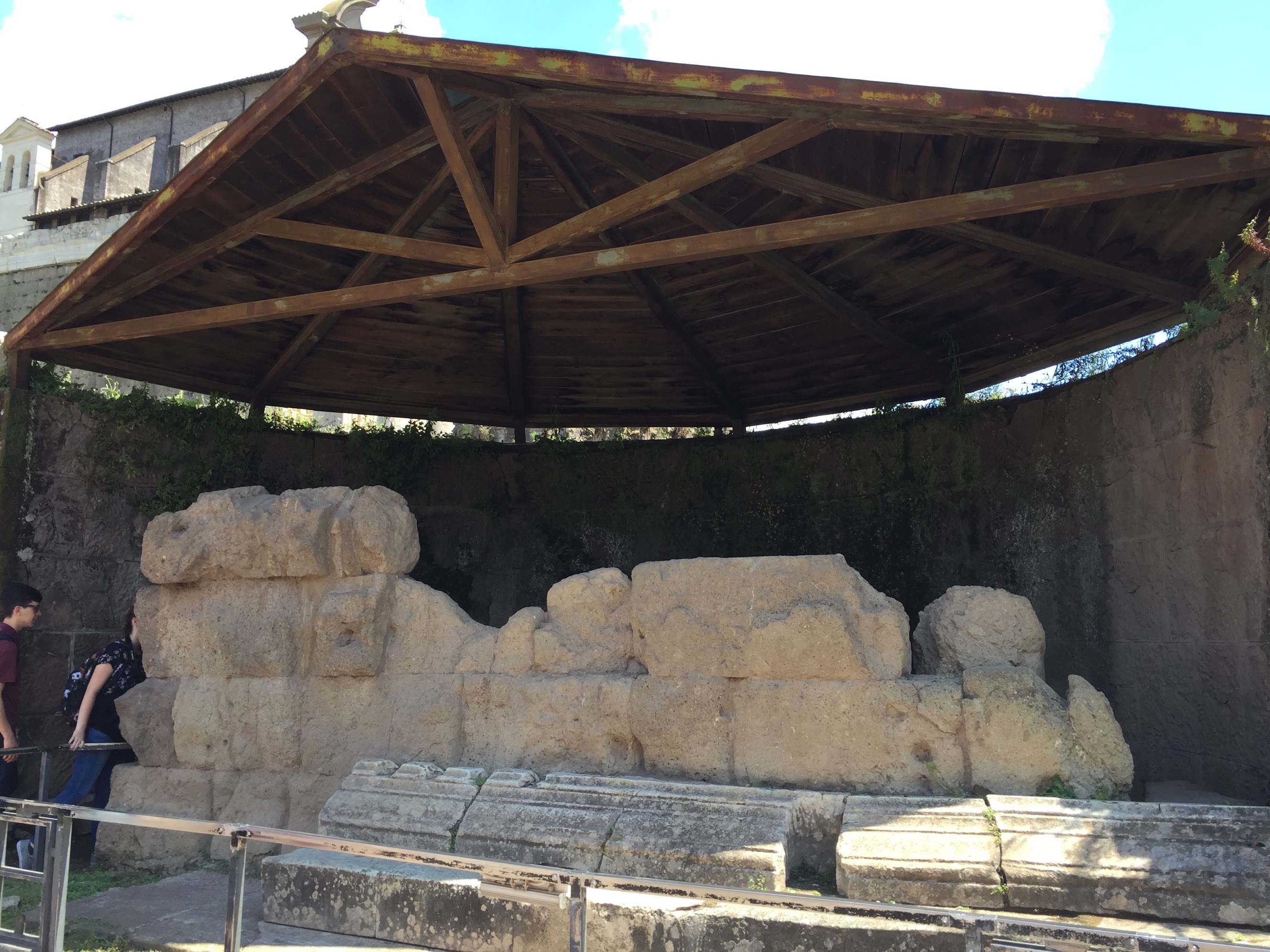
Remanents of the Temple of Divus Iulius
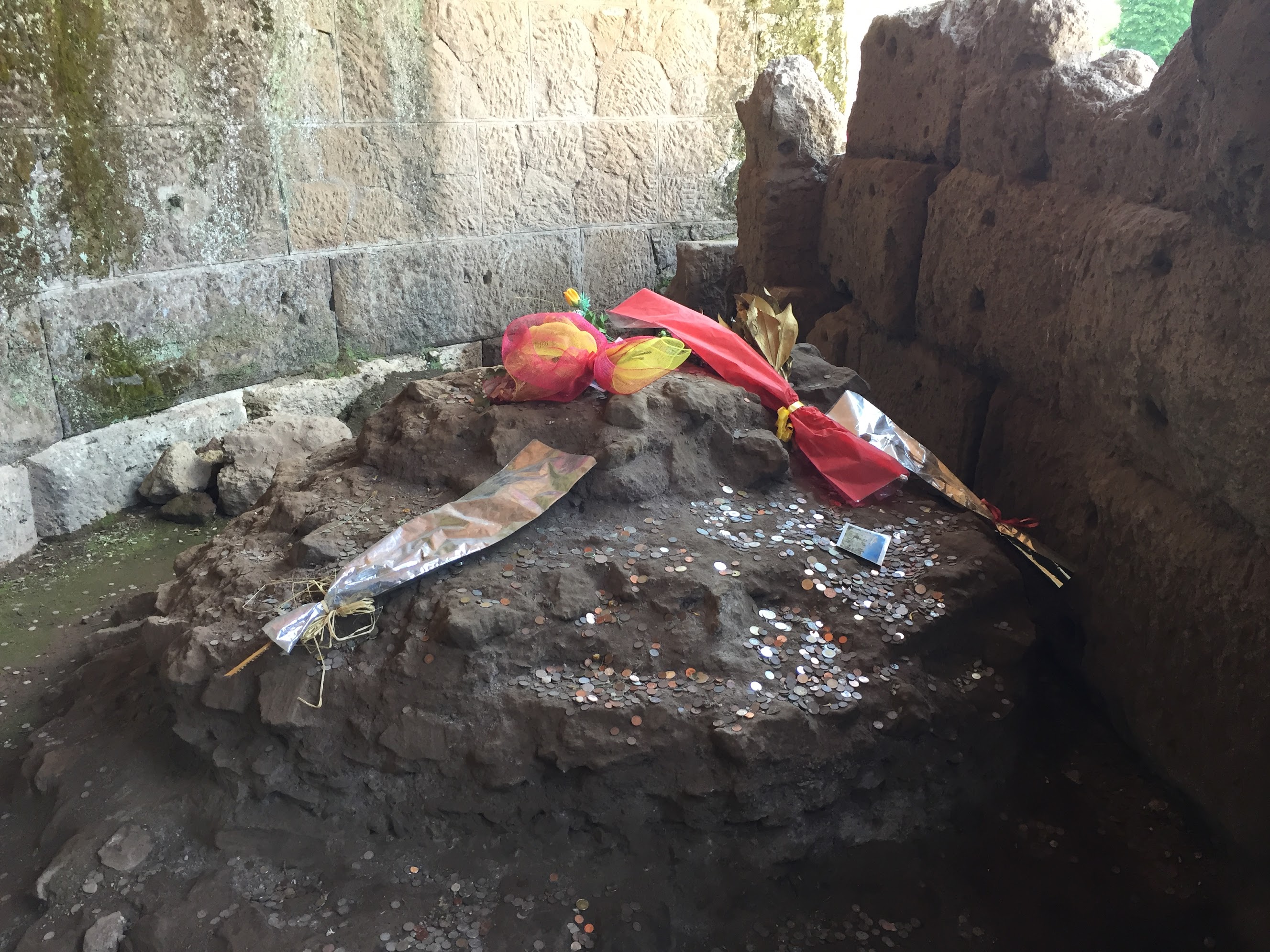
Remains of altar and funerary pyre
Caesar’s accession to perpetual dictatorship has been viewed as the inevitable outcome of a Republican system that had, for half a century, enabled the rise of strongmen, with Marius and Sulla as predecessors and Pompey as merely the latest rival. Caesar’s downfall, however, was the result of his own hubris. During his quadruple triumph, it escaped no one’s notice that his “foreign” conquests in Africa, Spain, and Egypt were thinly veiled victories over fellow Romans. He revived the dictatorship so infamously abused by Sulla— not for the customary limited term, but in perpetuity. Later, he “refused” a crown that Mark Antony offered him but only when the crowd reacted unfavorably. Caesar’s final act of placing his image on coinage— an emulation of monarchs and tyrants—ultimately provoked the Senate to action.

The EID MAR coin of Brutus commemorating the assassination
Source: Author's photo of ANS 1944.100.4554

The Julian Comet as represented on the coinage of Augustus
Source: Madison Art Collection (2024.1.27)
After his death, Caesar’s body was burned on a pyre in the Forum. Later, when a comet appeared in the sky, Octavian declared it evidence that Caesar had ascended to the heavens, and a temple was erected on the site in honor of the Divine Julius. The ruins of this temple still stand in the Roman Forum, where visitors today leave flowers at the spot of his cremation.
Ave, Caesar.
Details
- Issuer:
- Julius Caesar
- Date Minted:
- Jan/Feb 44 BCE
- Mint:
- Rome
- Obverse:
- Wreathed head of Caesar right; large eight-ray star behind; CAESAR IM[P]
- Reverse:
- Venus standing left, head lowered to left, holding Victory in her right hand and long sceptre set on star in her left; P SEPVLLIVS behind, M[ACER] before.
- Denomination:
- Denarius
- Metal:
- Silver
- Weight:
- 3.80g
- Diameter:
- 19mm
- Grade:
- Fine
- Reference:
- Crawford 480/5b; CRI 106a; BMCRR 4165